12 min read
How to Get Cited by ChatGPT
What a ChatGPT citation is, how web sources differ from model familiarity, and how to improve eligibility without citation guarantees.
Read Guide →Learn by Zqdo
Independent guides on AI search visibility today—with a home for future topics like AI automation, building with AI, and practical workflows for marketing and operations teams.
Start with AI search foundations. Shopify-specific AI operations live under Shopify AI. No platform guarantees inclusion, citations, rankings, or recommendations.
Overview
This is Learn by Zqdo’s AI directory. The first cluster focuses on AI search: how customers discover businesses through Google AI Overviews and AI Mode, ChatGPT search citations, and similar AI-assisted answers—not only the classic ten blue links.
Google’s generative AI features rely on the same Search foundations. Pages need to be indexed and eligible for snippets; helpful, people-first content still matters; special AI files, special schema, and content “chunking” are not requirements for Google’s AI features.
ChatGPT search can cite public web sources when crawlers can access them and the page is useful for the question. Appearing as a web citation is different from being broadly “known” by a model. Neither outcome is guaranteed.
What still matters for AI search: helpful content, crawlability, technical SEO, consistent business facts, reputation signals, and conversion readiness. As the hub grows, expect adjacent guides on automation and building with AI—while Shopify Flow and store-operations AI remain on the Shopify AI hub.
Paths by business type
AI-search foundations overlap, but local, ecommerce, and B2B teams usually prioritize different pages first.
Accurate Google Business Profile details, clear service and location pages, reviews as credibility context, and a website that matches the profile.
Crawlable product and collection content, technical SEO, Merchant Center readiness, and Shopify AEO when attribution and product clarity matter.
Entity-focused service pages, industries served, project or case evidence, and educational content that answers buyer questions completely.
Featured resources
Practical answers to emerging AI-search questions—grounded in official platform guidance and real client implementation patterns.
What a ChatGPT citation is, how web sources differ from model familiarity, and how to improve eligibility without citation guarantees.
Read Guide →Google’s eligibility requirements, content foundations, and what not to waste time on—including llms.txt myths.
Read Guide →An editorial framework for useful, evidence-backed pages that people and search systems can understand.
Read Guide →Complete, accurate local business data that supports Maps, Search, and AI-assisted local discovery.
Read Guide →Search Console generative AI reporting, GA4 behavior, referrals, and realistic lead measurement.
Read Guide →What structured data helps, what it cannot guarantee, and how to prioritize it after content clarity.
Read Guide →A plain-English comparison so teams stop treating every AI search surface as identical.
Read Guide →Small-business checklist for website clarity, indexability, entity consistency, and conversion.
Read Guide →Problem-based paths
Where teams get stuck—and the guide that answers the question accurately.
Teams want citations without understanding crawler access, public usefulness, or measurement limits.
→ Read the ChatGPT citation guideGoogle does not offer a separate AI ranking package. Eligibility still starts with Search foundations.
→ See Google’s requirements explainedSchema can help machines understand pages and enable rich results—but it does not guarantee generative AI inclusion.
→ Learn what schema actually doesProfile accuracy, website clarity, and trust signals matter more than AI gimmicks.
→ Open the local AI visibility guideRecommended tools
AI Search is the general pillar. Use these when you need local, Shopify, or ecommerce-specific depth.
Central Florida local SEO, websites, reviews, and AI-search foundations for service businesses.
Technical SEO, content, Merchant Center, and ecommerce discoverability.
AI workflows, Flow automation, content, support, and operations for Shopify brands—not AI search ranking.
Ecommerce-specific answer engine optimization for product content and attribution.
Client examples
Examples of how Zqdo structures business information, service pages, and conversion paths—foundations that help people and search systems understand a company.
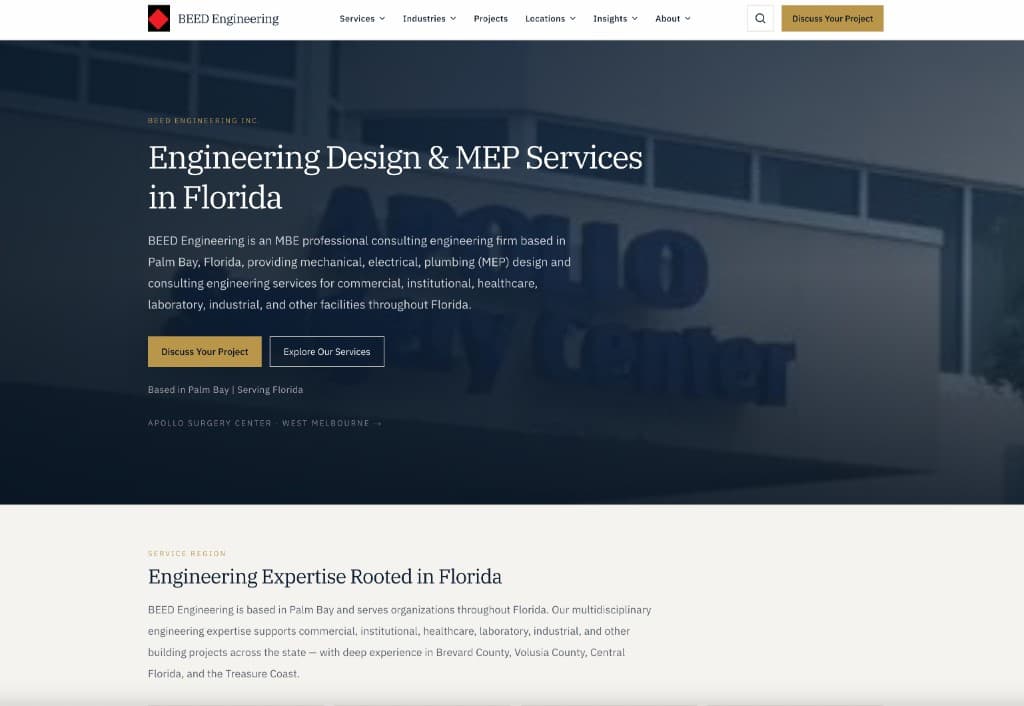
Strategy + Next.js transformation
BEED Engineering digital strategy and Next.js rebuild—information architecture, project intelligence, SEO/AEO, Google Sheets newsroom, and Wix migration for a Florida MEP firm.
Strategy · UX · Development · Migration · SEO · AEO · Custom Functionality
View Case Study →
B2B website project
Space Coast Plumbing Engineering website case study—service architecture, entity-focused content, and SEO for Brevard County and Central Florida plumbing engineering.
Website Development · SEO · AEO · Content Architecture
View Case Study →
Real Project Example
Suntree Business Center website case study—redesign for office-space rentals, SEO improvements, conference room booking, and maintenance request workflows.
Website Redesign · SEO · Software Setup · UX
View Case Study →Zqdo reviews crawlability, business information clarity, content structure, local or ecommerce signals, and conversion readiness—so your site is easier for customers and search systems to understand.
Get a Visibility ReviewFAQ
Straight answers to the questions merchants ask first.
AI search optimization means improving the clarity, accuracy, crawlability, and usefulness of your website and business information so search systems and AI-assisted experiences can discover, interpret, and potentially select your pages. It does not guarantee rankings, citations, or recommendations.
For Google, generative AI features build on the same Search foundations as classic results. Helpful content, indexing, and technical eligibility still matter. ChatGPT search adds crawler-access and citation considerations, but the practical work still starts with clear public information.
Google says you do not need special AI files, special schema, or content chunking for its generative AI features. Use structured data when it matches visible content and supports rich results—not as an AI ranking shortcut.
This /ai hub is the general AI directory—currently led by AI-search visibility guides, with room for automation and applied AI topics later. The Shopify AI hub covers AI workflows, automation, content, support, and operations inside Shopify. Ecommerce AI-search implementation details also live in the Shopify AEO guide.