Choose a redesign when the site’s structure, platform, or message cannot support the business. Choose website management when the site is basically sound and the problem is upkeep, speed, tracking, or a backlog of improvements. This guide is for owners stuck between those projects. It ends with a decision checklist and a path to a website audit if you want a recommendation on your own site.
A redesign is a project with an end. Management is a relationship that keeps the site useful after that. Buying the wrong one wastes the budget: a new design that ignores a tracking or offer problem, or a retainer spent propping up a site that should be replaced. What management includes is covered in what website management includes. Shopify-specific rebuild questions are in the Shopify website redesign guide.
Signs you need a redesign
The site cannot explain the offer without a developer editing templates for every sentence.
Mobile layout fails on the pages that should produce calls or sales.
The platform blocks the integrations or editing model the team needs.
The visual system and information architecture no longer match the services you sell.
Years of plugins, apps, or page-builder layers make every change risky.
Signs you need management instead
The offer is clear and the templates work. The backlog is updates, landing pages, and fixes.
Leads or sales dropped because a form, pixel, or app broke—not because the design is old.
You want speed, SEO hygiene, and content changes on the current site.
The last agency launched and disappeared.
Common problems, and which project they belong to
Traffic versus conversion
Low traffic with clear pages is usually a visibility problem: local SEO, content, or offers in the market. Traffic without calls is often conversion: message, contact path, trust, speed. A redesign does not fix a Google Business Profile, and a management retainer does not invent demand. Start with the lead-generation checklist.
When design is not the real issue
Owners often ask for a new look when the phone number is buried, the form fails, or the service pages are vague. Change those first if the layout can hold them. If the template cannot, then the design system is the constraint.
Speed and technical debt
Slow pages can be fixed inside the current theme when the cause is images, tags, or a few scripts. They justify a rebuild when the theme itself is the weight and every cleanup is undone by the next edit. Shopify stores should read the performance audit guide before assuming a new theme.
Content and messaging
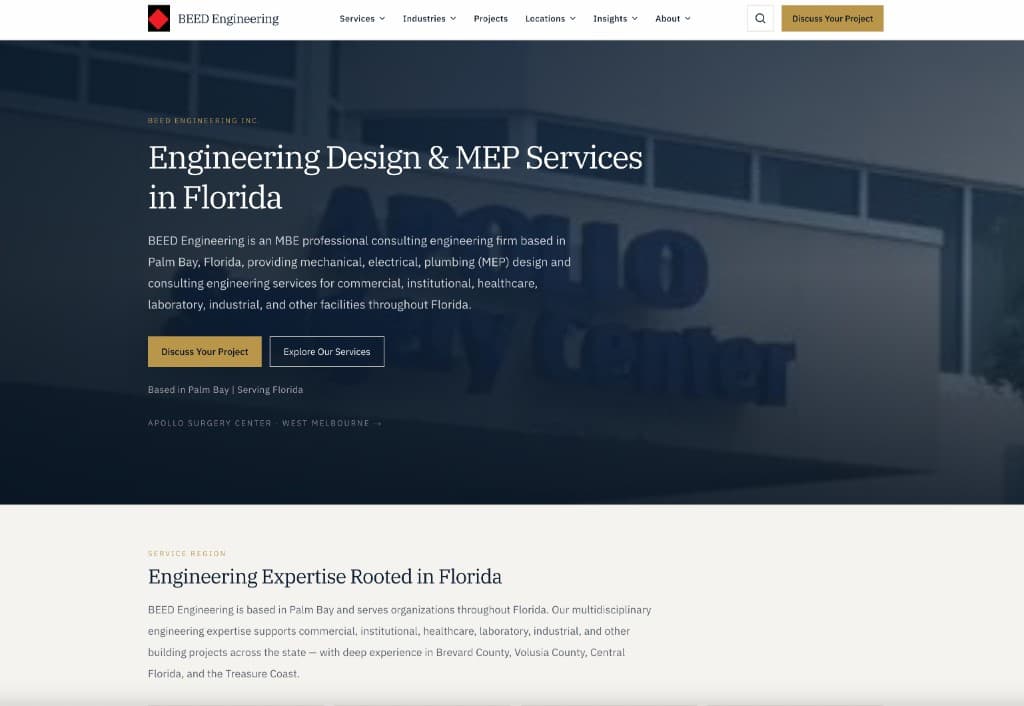
Rewriting the homepage and service pages can be a management task. If the navigation and page model cannot express the services, the rewrite needs a new architecture. BEED Engineering is the second case: the firm needed a structure for services, locations, projects, and educational pages, which a coat of paint would not have created.
SEO and migration risk
Redesigns lose traffic when URLs change without redirects, content is dropped, or the new site is slower. Management avoids that risk because the URLs stay. If you redesign, budget for the redirect map, metadata, and a Search Console check. That work is part of the project, not a later SEO add-on.
Cost factors
A management month is sized to hours and response expectations. A redesign is sized to page count, content readiness, platform migration, integrations, and QA. Neither has a universal price. A small marketing site and a Shopify catalog are different jobs. Cost thinking for Shopify builds is in the development cost guide. For a local marketing site, start from what a small business website costs.
Decision checklist
Can a visitor tell what you do and how to contact you on a phone, on the current homepage?
Do the main service pages exist, or is everything one vague list?
Do forms and click-to-call work this week?
Is the site slow on the page that should convert, and have you identified why?
Can your team update normal content without breaking the layout?
Would a redesign change URLs, and do you have a redirect plan?
Is the complaint “it looks old” or “people cannot inquire”?
If the first three fail because the template cannot hold a clear page, scope a redesign. If they fail because nobody maintains them, scope management. If you cannot tell, an audit is the cheaper first step.
Key Takeaways
✓Redesign when structure, platform, or message cannot be fixed in place.
✓Manage when the site works and the gap is upkeep, speed, tracking, or a backlog.
✓Traffic problems and conversion problems are different projects.
✓A visual refresh does not fix a broken form, a missing service page, or a neglected Google Business Profile.
✓Budget redirects and QA into any redesign that changes URLs.
Frequently Asked Questions
How do I know if I need a website redesign?+
You need one when the current templates, platform, or information architecture cannot present the offer, work on mobile, or be updated safely. “It looks dated” is not enough by itself.
When is website management the better spend?+
When the site is structurally fine and you need updates, fixes, performance care, tracking checks, and a prioritized backlog.
Can a redesign hurt SEO?+
Yes, if URLs change without redirects, content is removed, or the new site is slower. Those risks are manageable when they are part of the project plan.
Should I redesign if my website gets traffic but no leads?+
Not automatically. Check the offer, calls to action, forms, trust, and speed first. Redesign when the template cannot hold those fixes.
What should I ask for first?+
An audit that says which of the two projects matches the constraint. That is cheaper than commissioning the wrong one.
Continue Learning
Related guides, real Zqdo project examples, and the category hub for deeper exploration.
David Frempong is the founder and digital consultant at Zqdo. He is a hands-on web developer and Shopify developer who helps ecommerce brands and local businesses improve their websites, integrations, SEO, AEO, analytics, and conversion performance.